Cabin wood only.
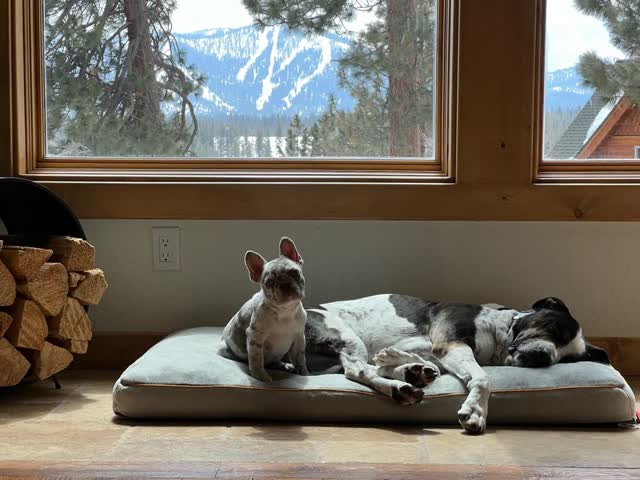
Just the dry wood from our rack. No painted, treated or mystery wood.
A cabin tradition, from the first split to the last ember. (Don't worry, we'll teach you how to start a fire.)
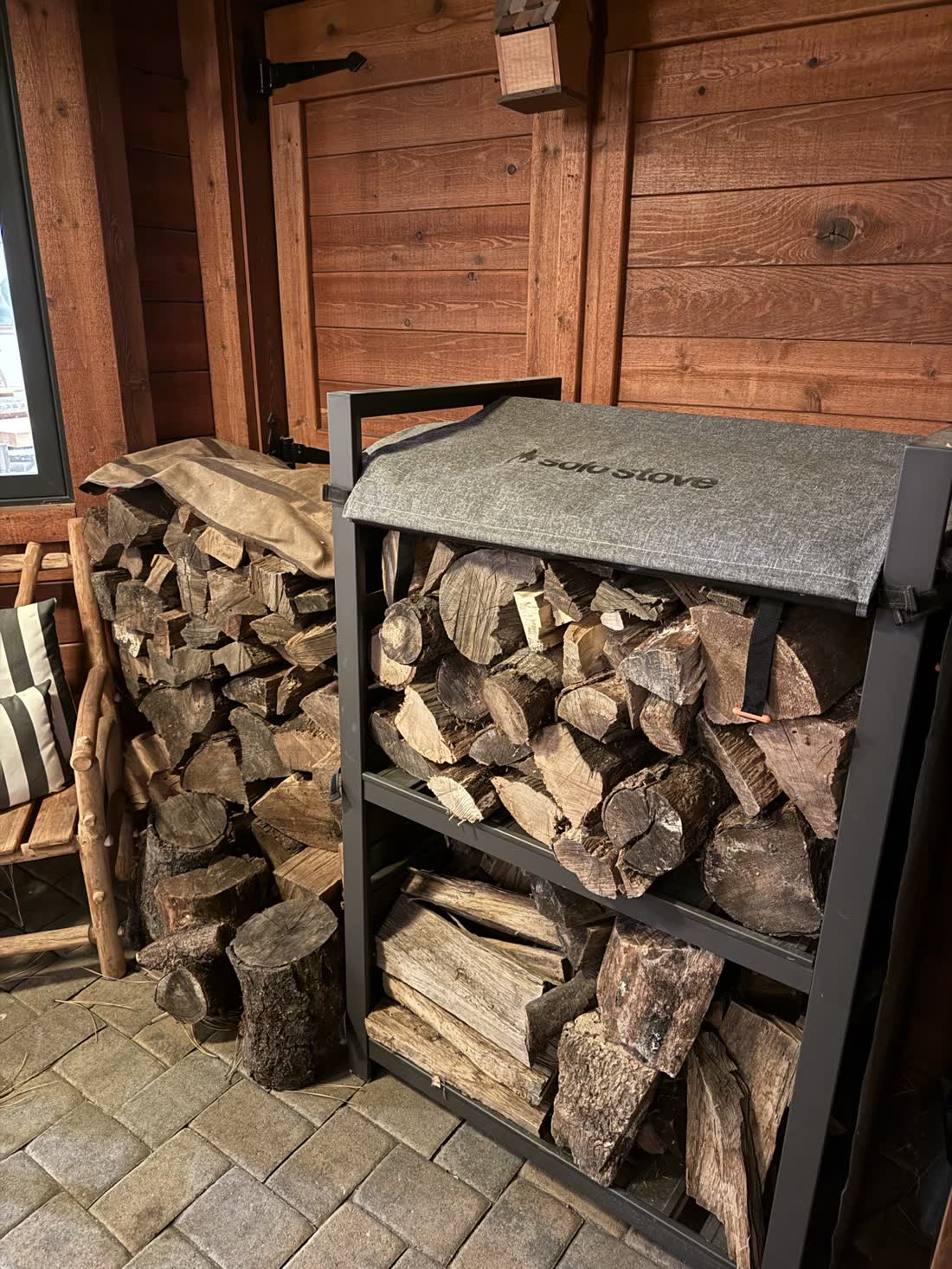
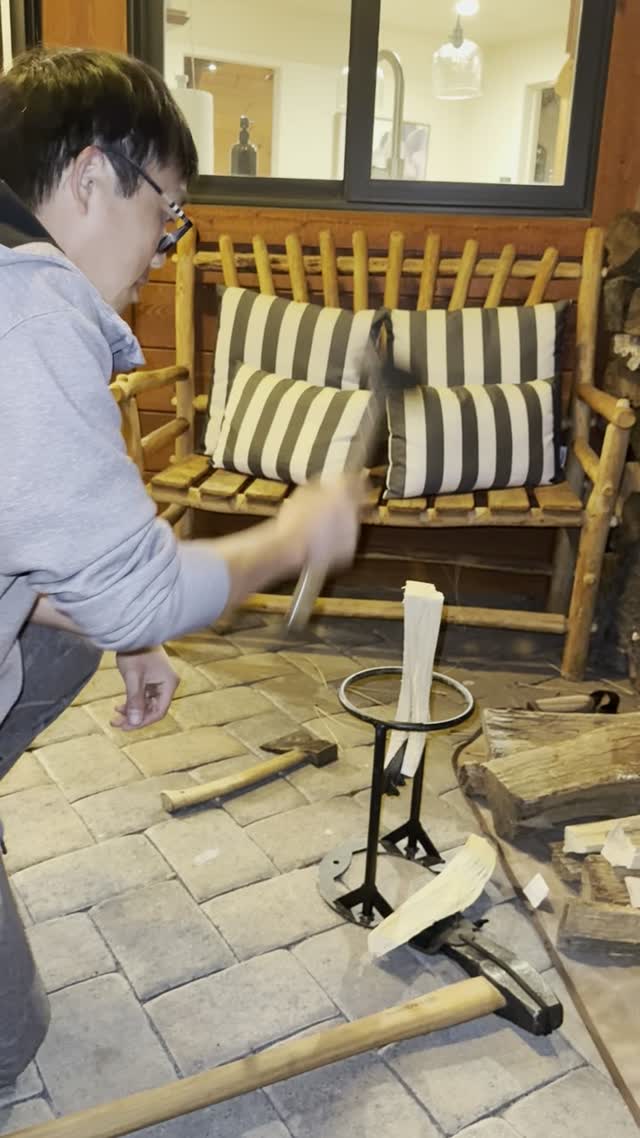
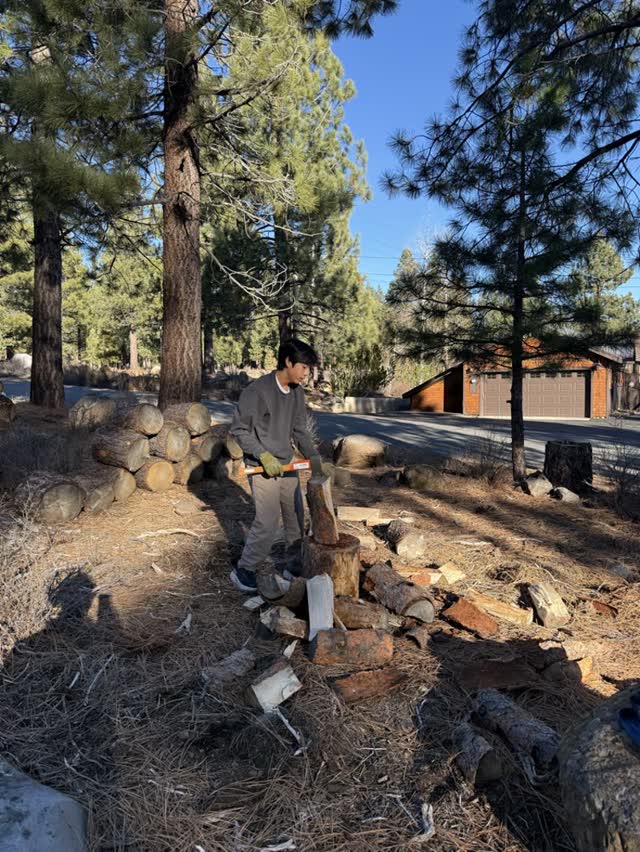
Every piece by the stove went through this splitter first.
Forty-some winters later, they're ready.
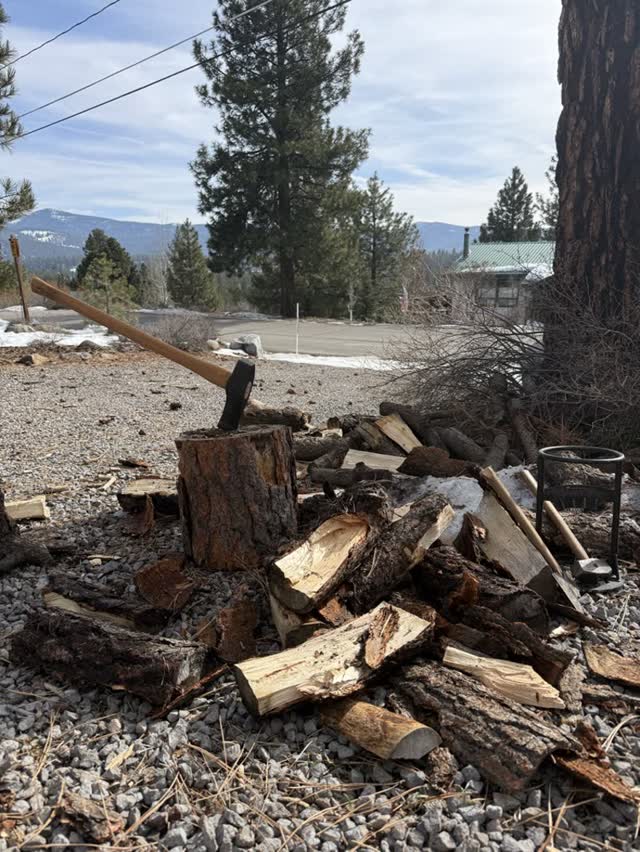
We cut the pine on our own lot, then saw it into rounds.
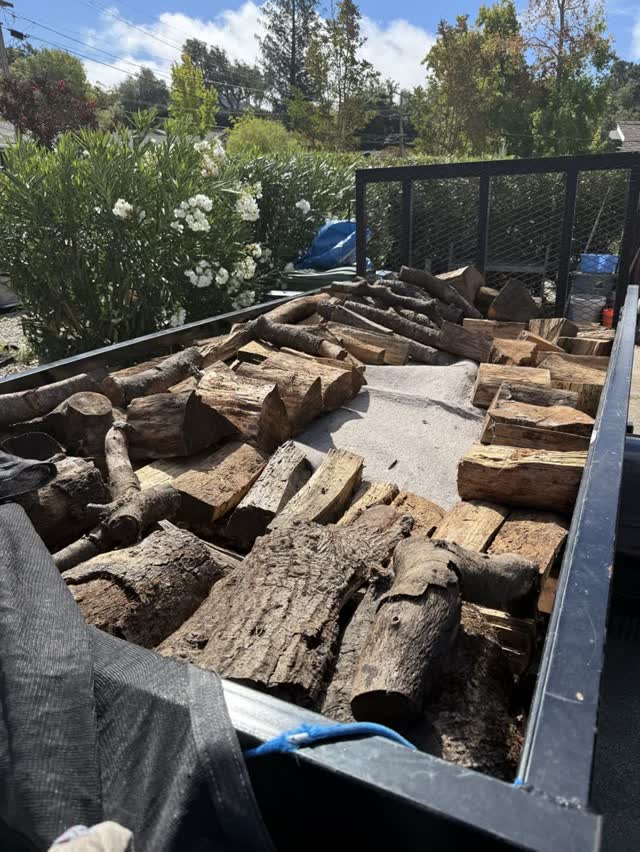
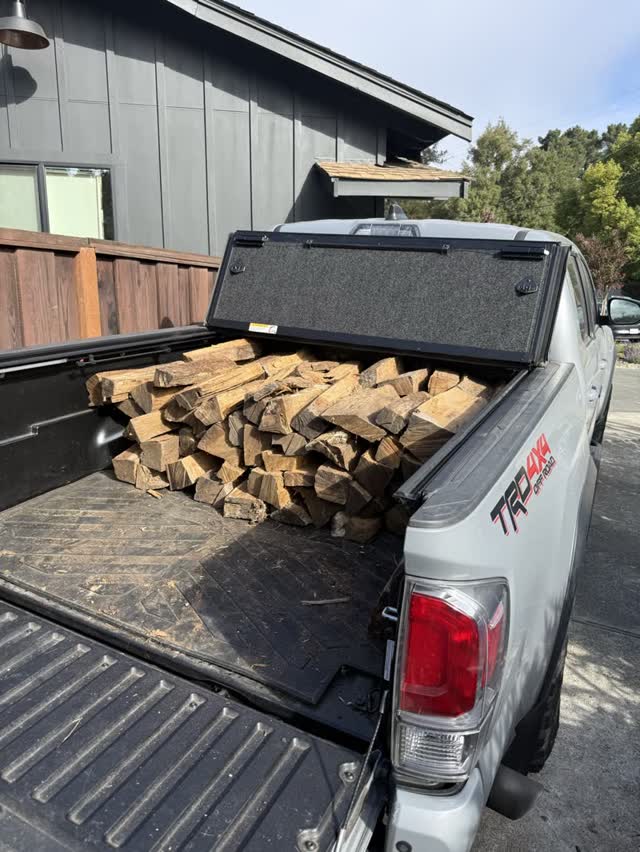
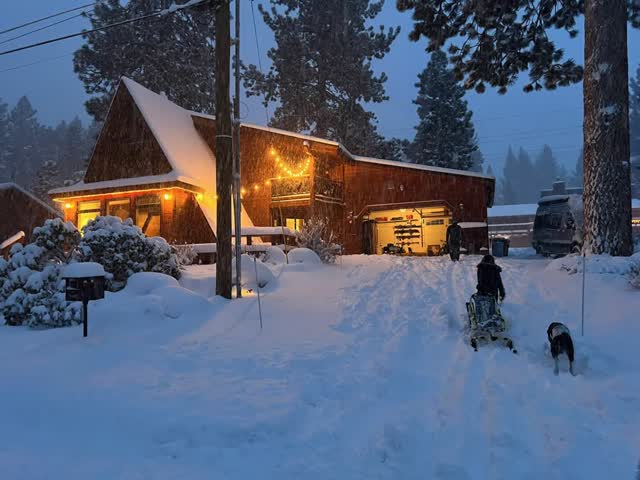
Bought or gathered down in the valley, then hauled up the mountain on our trailer.
Stacked with air all around it for a full season, so it's dry enough to burn clean.
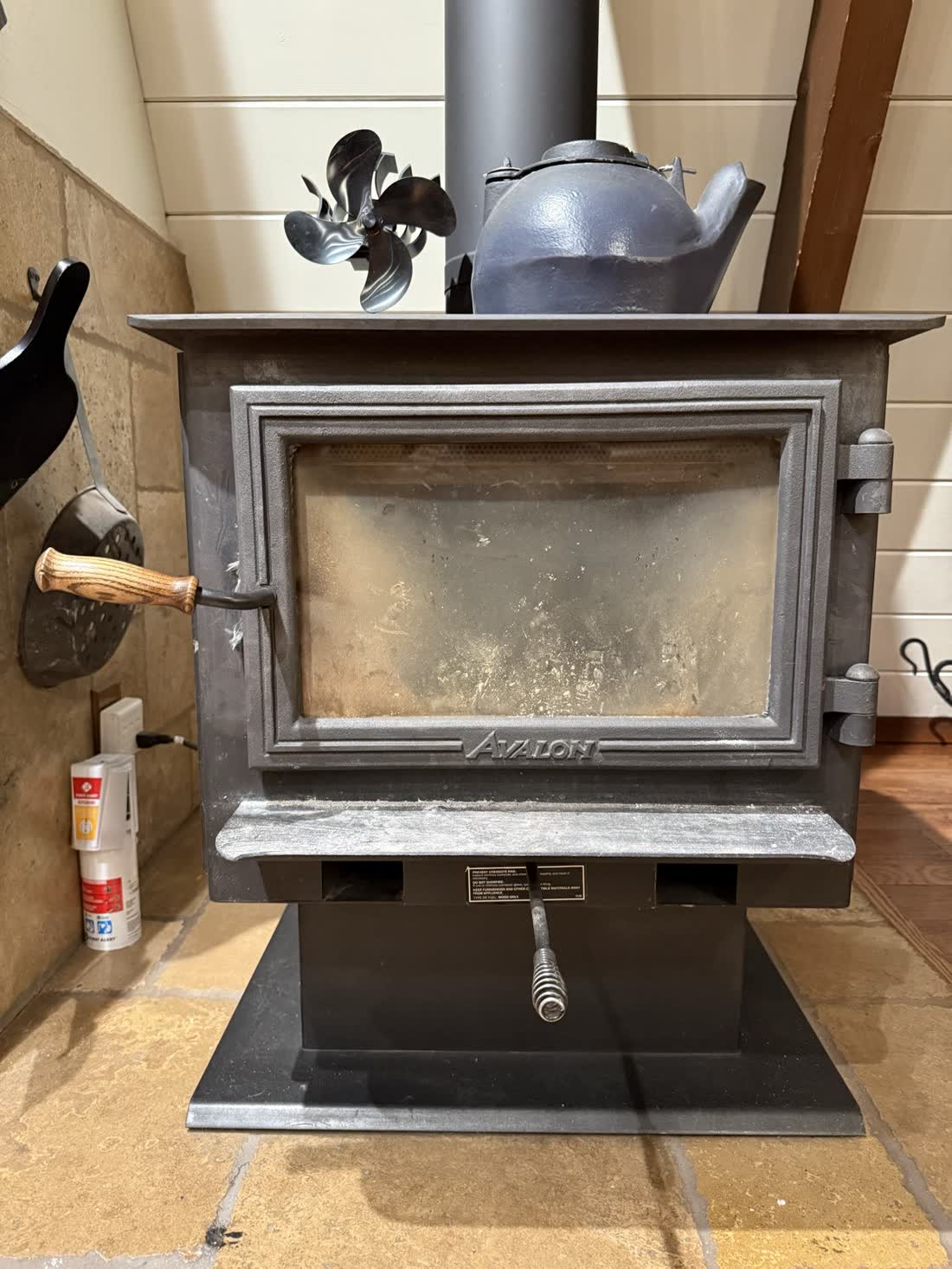
Turn it and swing the door open. It gets hot once the fire's going, so use a glove.
The rod under the door. Pull it out for more air and a bigger fire. Push it in to calm things down.
Spins on its own once the stove heats up, pushing warm air into the room.
Right beside the stove. You won't need it, but now you know where it lives.
Keep a little water in it. It adds moisture to the dry mountain air as the stove heats up.
Every armful by the stove is one of these. Learn them once and you'll never build a smoky fire again.
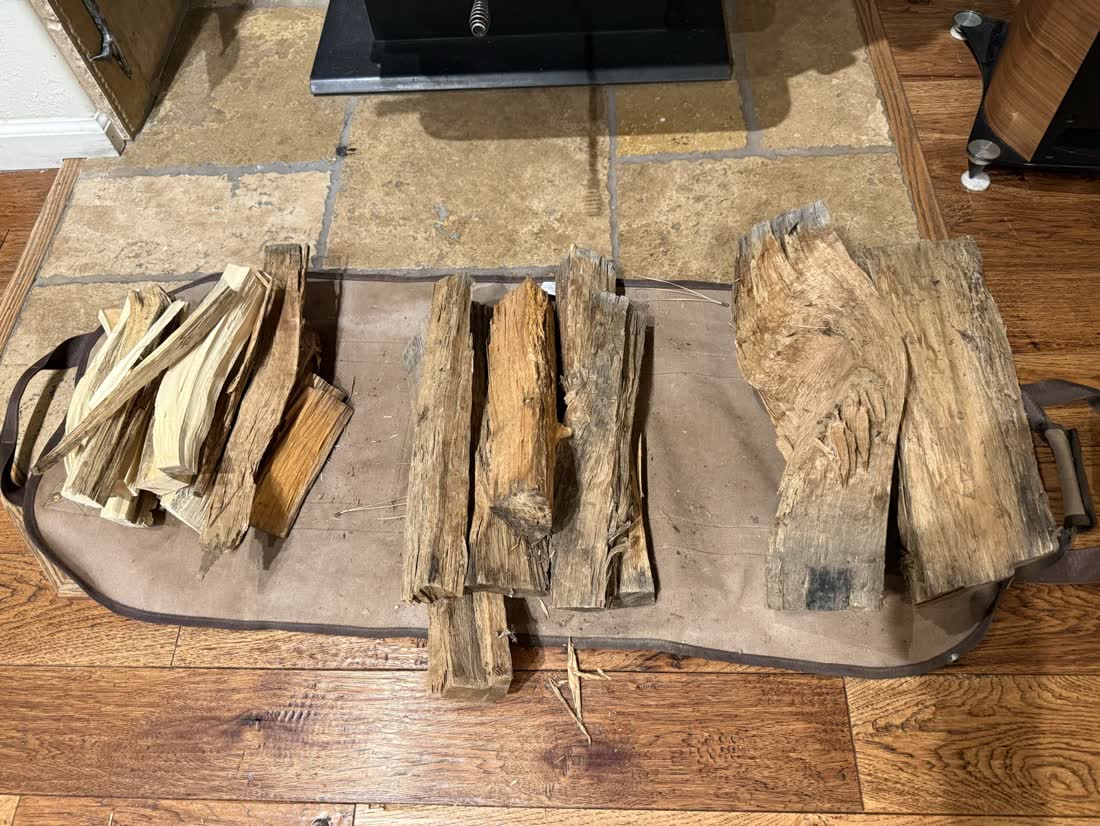
Small to start. Big to keep it going.
Kindling catches in seconds. Pine splits burn hot and quick. Oak burns slow and steady.
Look for cracked ends. Knock two pieces together: dry wood sounds hollow. Wet wood hisses and smokes.
that's why ours sits a full season first.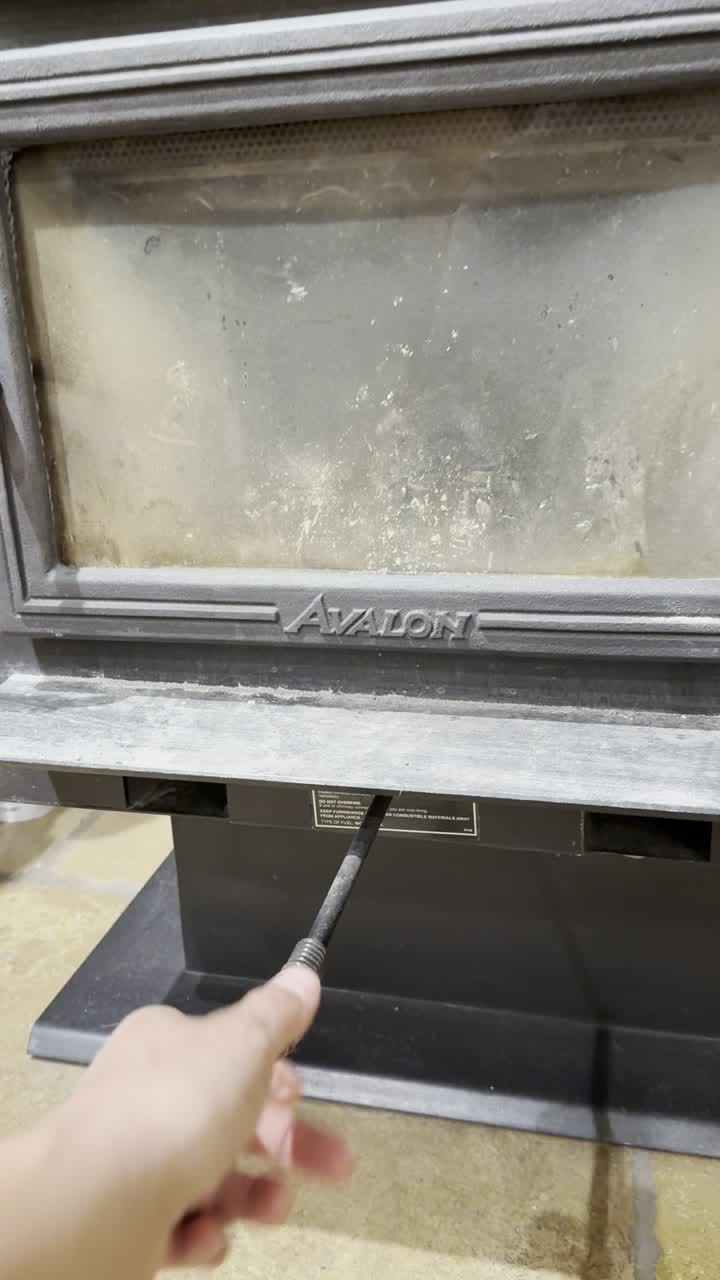
Pull the rod under the door all the way out. More air means a bigger, faster fire, and that's exactly what you want to start.
Tap to check it off, then keep scrolling.
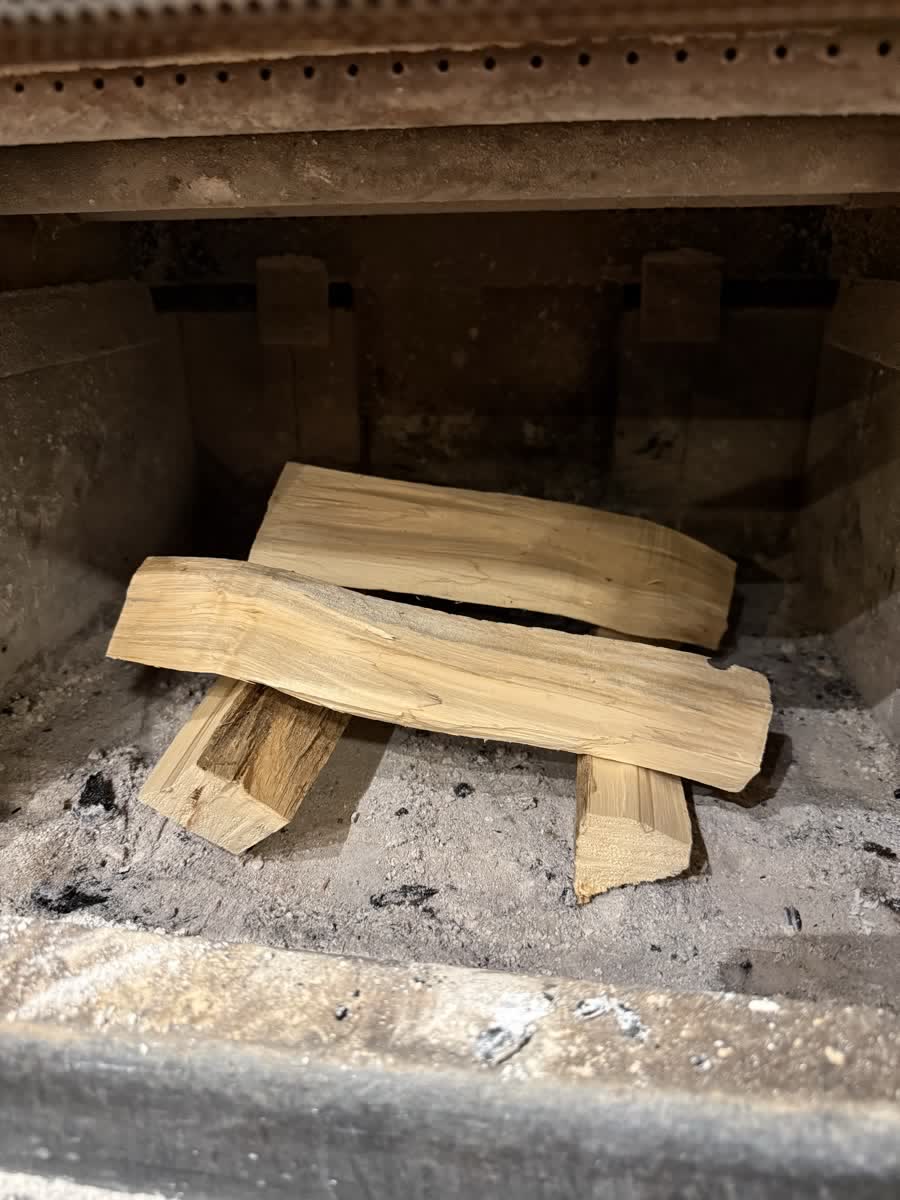
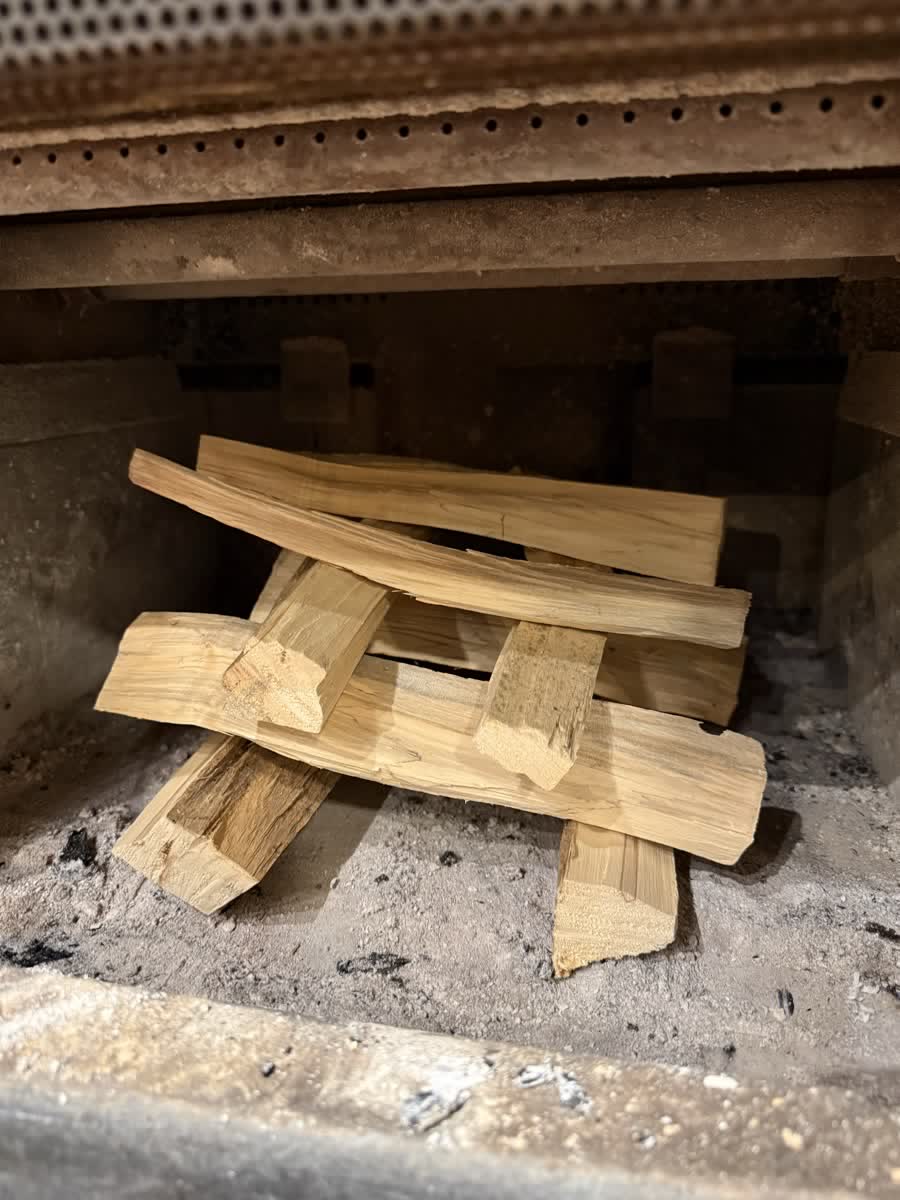
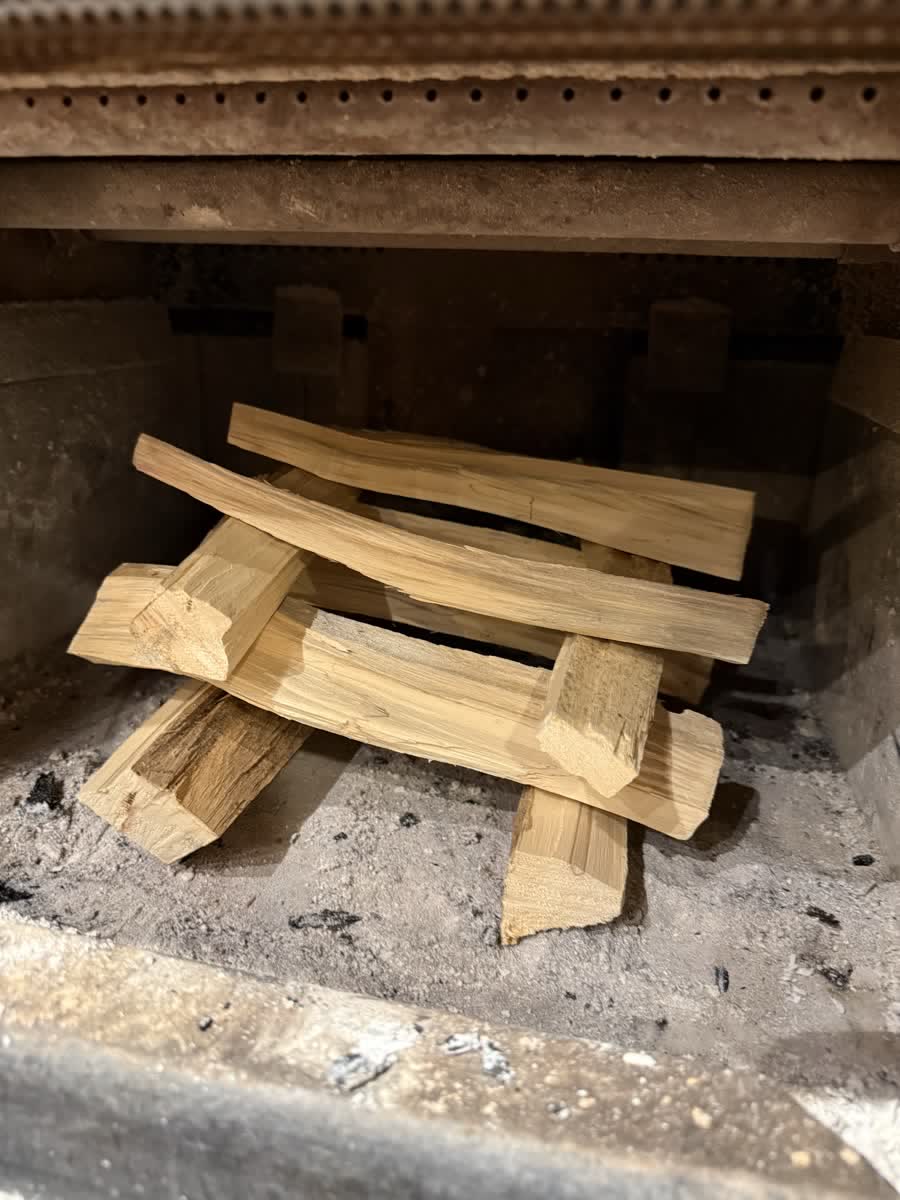
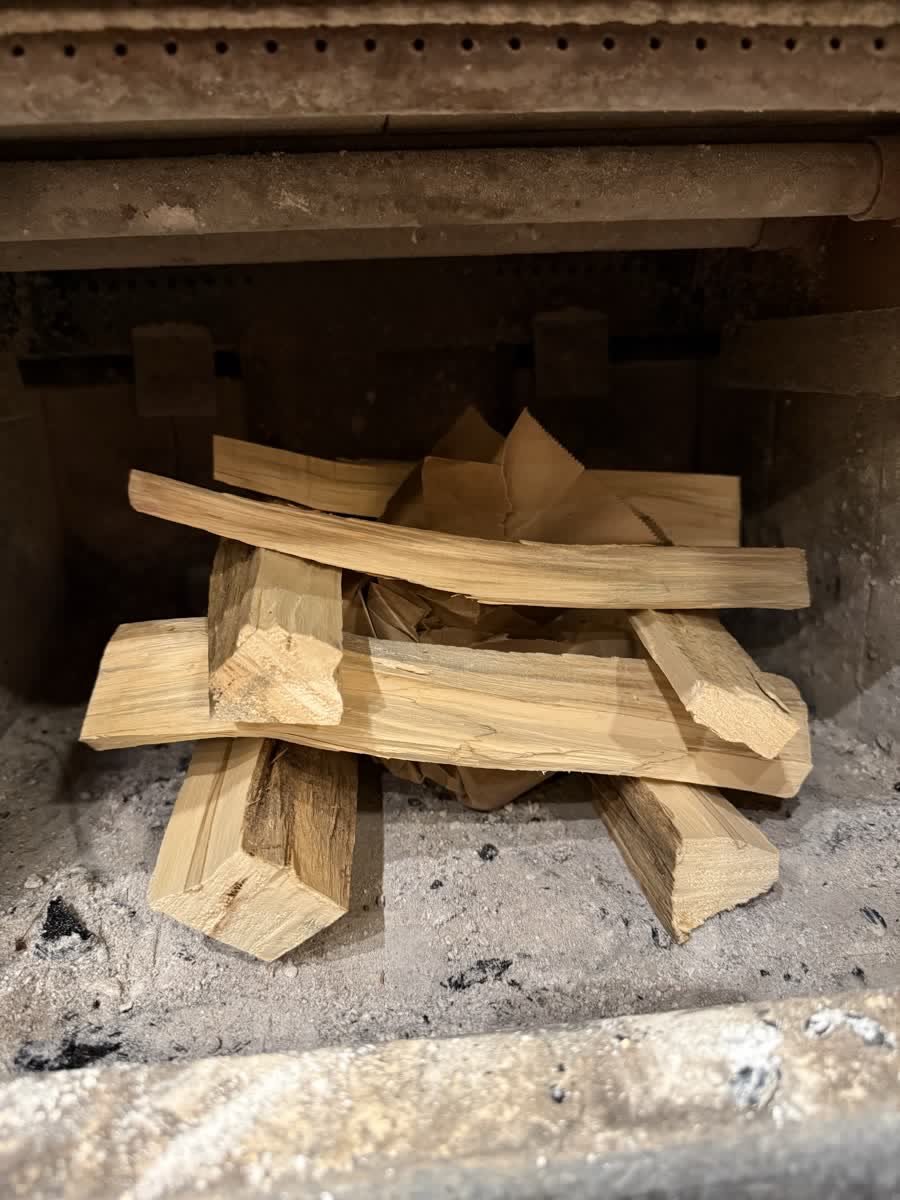
We call it the log cabin.
A ¼" crack of air for the first five minutes. Stay with the fire while the door is unlatched.
Once everything's burning, latch the door. Keep the air wide open until there's a bed of glowing coals.
Some sweeps down the inside of the glass, which keeps it clean. Some comes in low, right under the fire.
Heat and smoke go up the chimney and pull new air in behind them. That pull is called draft.
Pull it out: more air, bigger fire. Push it in: less air, calmer fire.
start with it all the way out.Air needs a path through the wood. Pack it tight and the fire chokes and smokes.
Tip: wait for a bed of glowing coals before you add oak.
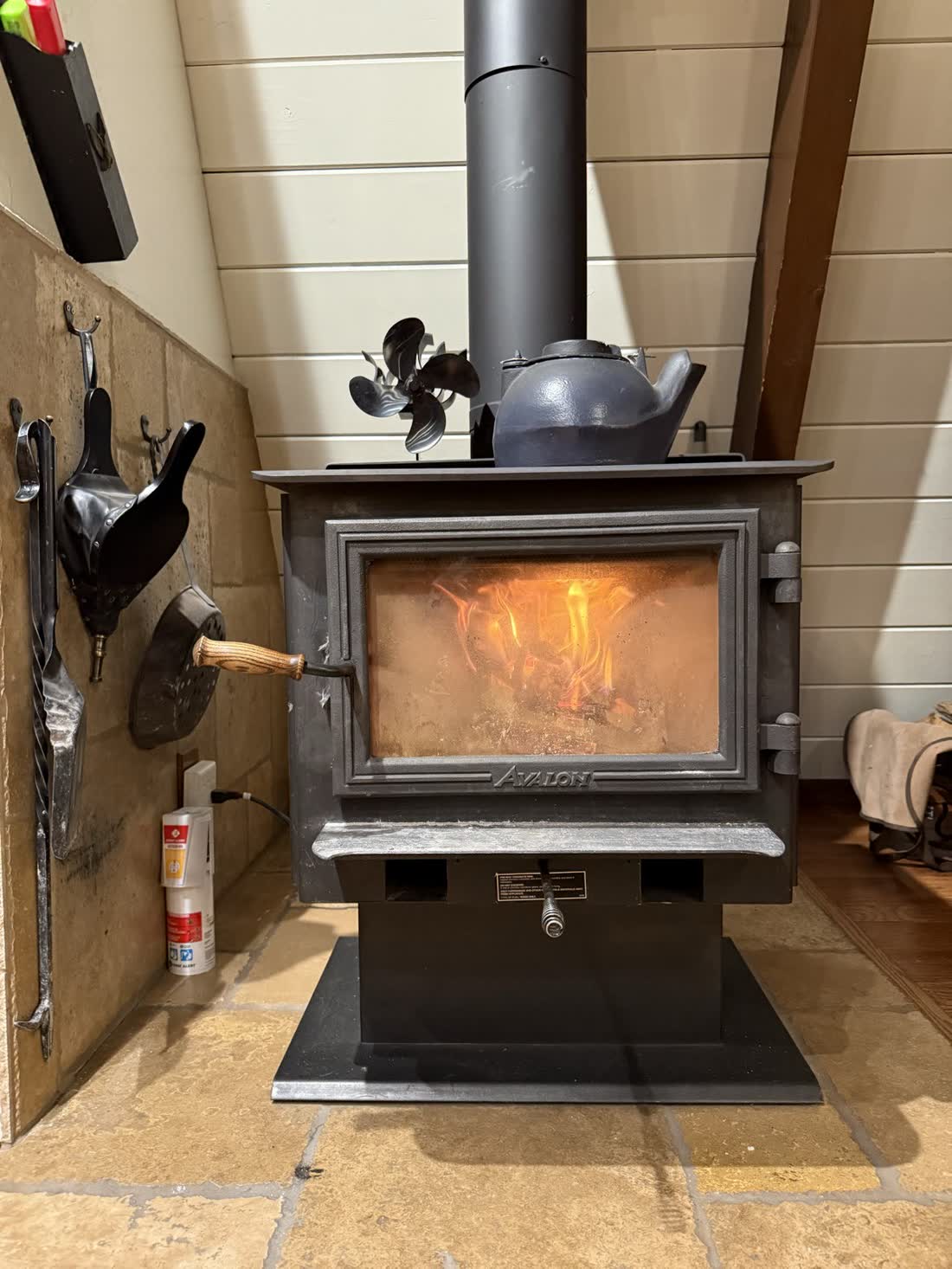
You built that. Now pour something warm and put your feet up.
Flames settle into glowing coals.
Nothing's wasted. It all goes back to the earth, the way the forest always has.
A few things that keep the fire happy, the cabin standing, and everyone's eyebrows intact.
Just the dry wood from our rack. No painted, treated or mystery wood.
Paper and kindling do the job every time.
ever. (seriously.)Pizza boxes, wrapping paper and cardboard go in recycling, not the stove.
The glass gets hot. Kids and pets stay a few steps away.
Blankets, boots, bags and wet socks stay about 3 feet from the stove.
The only exception is the first 5 minutes of lighting, and you stay with it.
Metal ticks as it heats and cools, and a blower hums on by itself once it's hot. All normal.
Follow these and the fire will treat you right.
happy fire, happy cabin.Let the last log be the last log.
It's fine to head to bed while it dies down on its own. The stove is built for exactly this.
The stove stays hot long after the flames are gone. Hands off the glass.
Ash can hide hot coals for days, so please don't scoop or dump it. That part's our job. Good night!
Once everyone's safe, let us know too.
Behind every good fire: splinters, sore arms, and a few swings that didn't quite land.
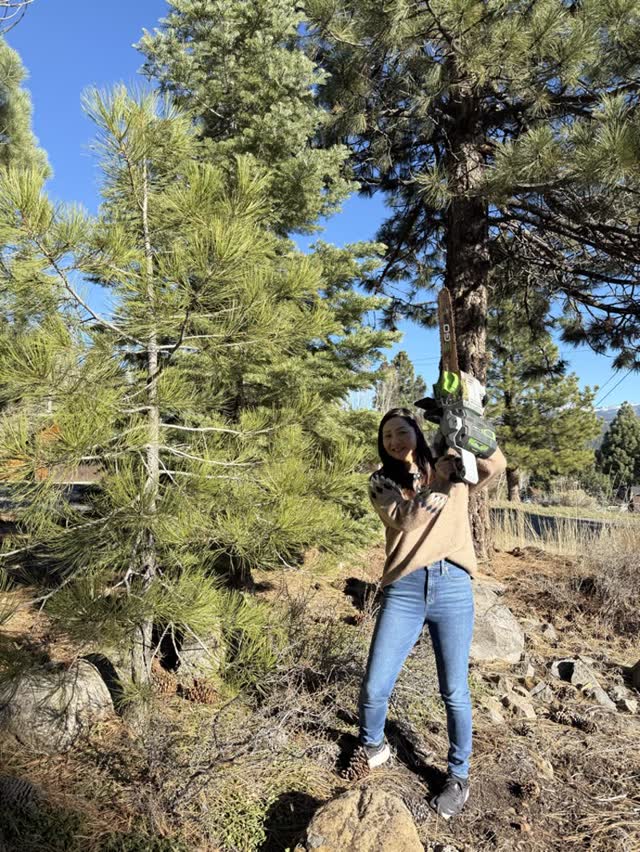

Some trees were harmed in the making of this fire.
They were very well seasoned.